
Old Mesilla sits just southwest of Las Cruces, close to the Rio Grande, and it packs more history into a few blocks than most New Mexico towns twice its size. Every building on the plaza has a story. Here’s the one that ties them together.
Long before the plaza
The Mesilla Valley was farmed long before any town stood here. People of the Jornada Mogollon culture lived along this stretch of the Rio Grande centuries ago, and later Apache bands moved through the region.
In 1598, Juan de Oñate’s expedition came up the river and opened what became El Camino Real de Tierra Adentro, the royal road from Mexico City to Santa Fe. For more than two centuries, traders, soldiers and settlers passed through this valley on their way north.
A Mexican town is founded
The 1848 Treaty of Guadalupe Hidalgo ended the Mexican-American War and made the Rio Grande the new line in this part of the country. Land on the east bank, where Las Cruces sits, became American. The west bank stayed Mexican.
Many families who didn’t want to live under the U.S. flag crossed the river and settled on a low tableland, a mesilla, on the Mexican side. That’s Mesilla’s beginning: a town founded by people choosing to stay Mexican.
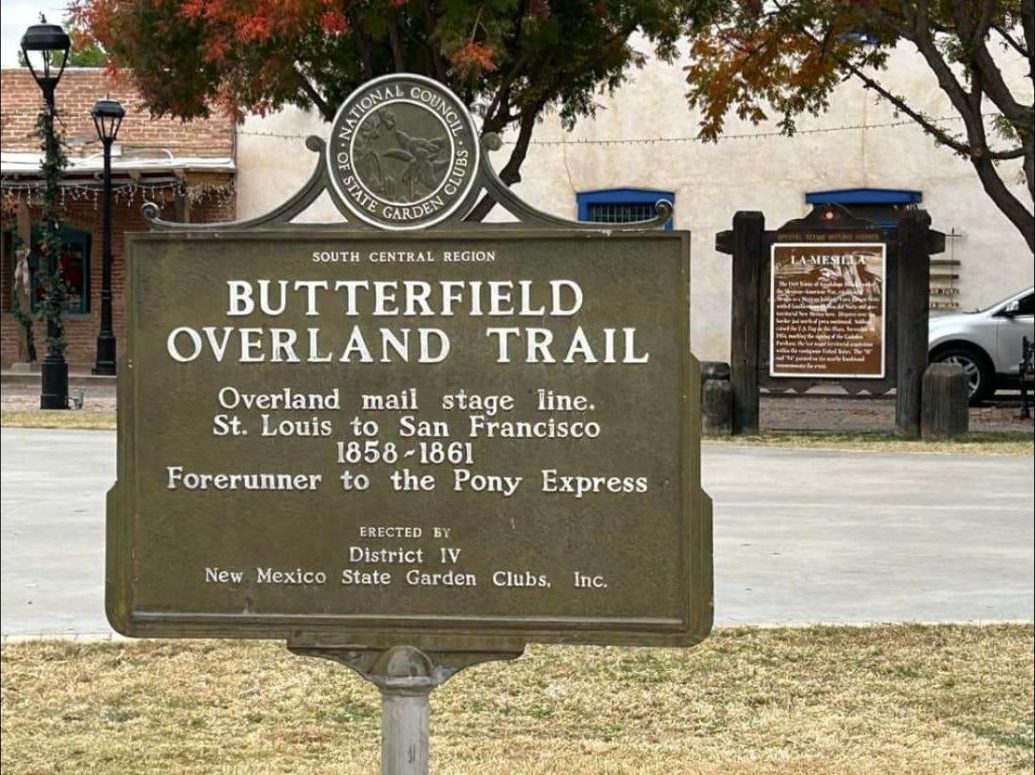
The Butterfield Overland Mail ran through Mesilla from 1858 to 1861.
The flag goes up on the plaza
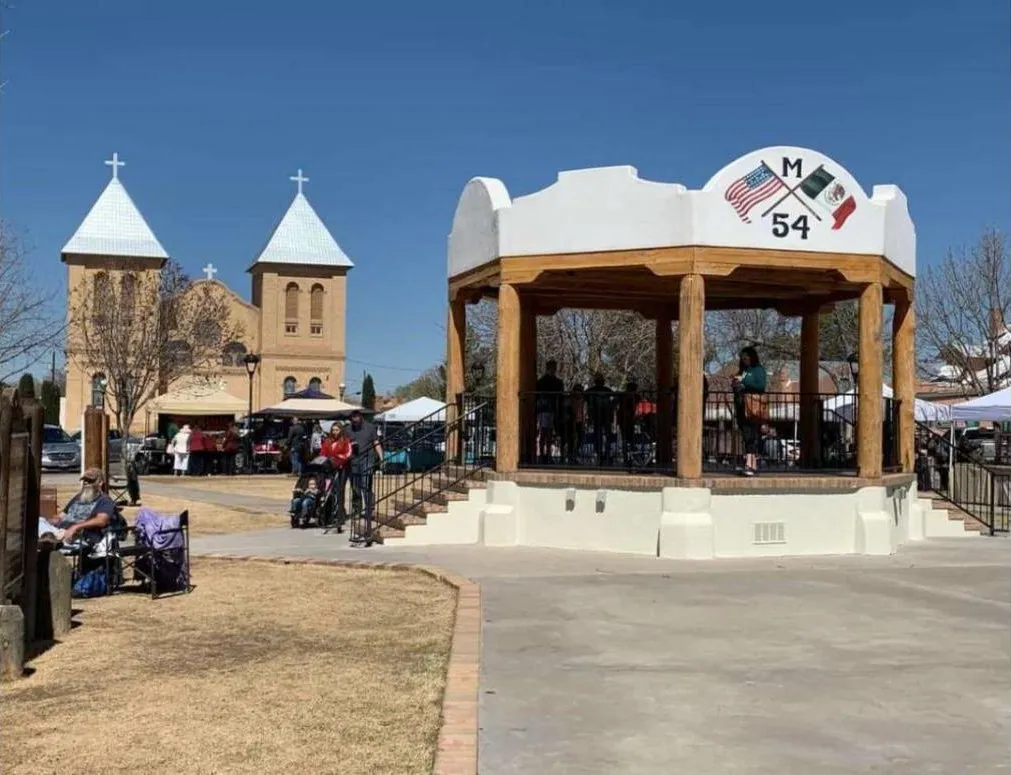
It didn’t stay Mexican for long. The Gadsden Purchase, signed in 1853 and ratified in 1854, moved the border south so the United States could build a southern railroad route. Mesilla became American, and in November 1854 the U.S. flag was raised over the plaza. That’s the “54” you’ll see on the gazebo today, under crossed U.S. and Mexican flags.
For the next few decades Mesilla was one of the most important towns in the region, bigger and busier than Las Cruces.
Stagecoaches and a Confederate capital
From 1858 to 1861, Butterfield Overland Mail stagecoaches stopped in Mesilla on the long run from St. Louis to San Francisco. A marker on the plaza says so.
When the Civil War began, Confederate troops from Texas took Mesilla, and in 1861 it was declared the capital of the Confederate Territory of Arizona. Union troops from California pushed them out the next year.
Lawmen and outlaws
As the seat of the court for the region, Mesilla saw its share of Old West characters. The most famous trial was in April 1881, when Billy the Kid was convicted in the courthouse on the plaza of killing Lincoln County Sheriff William Brady and was sentenced to hang. He escaped in Lincoln weeks later. Read the whole story.
Then the railroad passed it by
In 1881 the Santa Fe railroad came through the valley and chose Las Cruces over Mesilla. Business followed the tracks, Las Cruces grew and Mesilla stayed small. That’s a big reason so much of the old town survived.
Old Mesilla today
Today the plaza is a National Historic Landmark district and the heart of the Town of Mesilla. The Basilica of San Albino anchors the north side. Adobe buildings around the plaza hold shops, galleries and restaurants, and on weekends you’ll often find music, dancers and markets.
The best way to see it is on foot:
- Start at the gazebo and look for the “54.”
- Walk to the basilica on the north side of the plaza.
- Find the old courthouse, now the Billy the Kid Gift Shop, and read the sign by the door.
- Look for the Butterfield marker on the plaza.
- Sit down for a meal at La Posta de Mesilla or a plaza patio.
Want a guide? La Morena Walking Tours tells these stories in person.